July 15, 2026
Dharaledar Bureau / Punjab
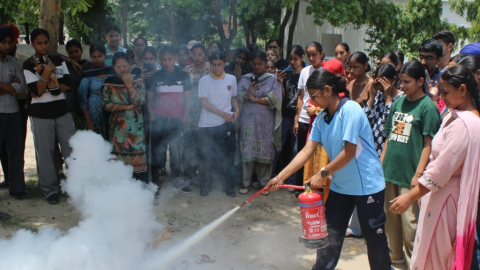
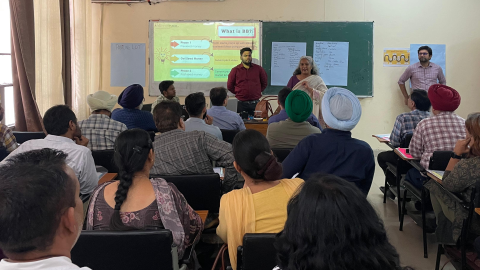
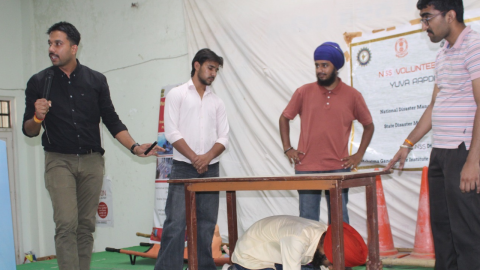
Sangrur, July 15: Under the Yuva Aapda Mitra Scheme (YAMS), sponsored by the National Disaster Management Authority (NDMA), Government of India, supported by the Punjab State Disaster Management Authority (SDMA), Punjab, and organized by the Mahatma Gandhi State Institute of Public Administration (MGSIPA), Government of Punjab, Sector 26, Chandigarh, the second day of the seven-day disaster management training programme for National Service Scheme (NSS) volunteers was conducted successfully at Akal College of Education, Sangrur. The day commenced with a recapitulation session conducted by Saloni Sharma, Disaster Management Trainer, MGSIPA, who provided a comprehensive review of the key concepts covered during the first day of the training programme. She highlighted the objectives of the Yuva Aapda Mitra Scheme and emphasized the role of trained youth volunteers in strengthening community resilience and supporting disaster response efforts. The first technical session of the day was delivered by Balwinder Kaur, Disaster Management Trainer, MGSIPA, on Animal Bite and Snake Bite Management. During the session, the volunteers were sensitized about various types of animal bites, common poisonous and non-poisonous snakes found in the region, symptoms of envenomation, and appropriate first aid measures. She emphasized the importance of timely medical intervention and educated participants about common misconceptions and harmful practices associated with snake bites. Practical guidance was also provided on how to respond safely during such emergencies while ensuring the safety of both the victim and the responder. The second session was conducted by Mr. Yogesh, Training Coordinator, MGSIPA, on Earthquake Safety and Response. He explained the causes and characteristics of earthquakes, potential hazards associated with seismic events, and the importance of disaster preparedness. The volunteers were trained on safety measures to be followed before, during, and after an earthquake. Special emphasis was laid on the “Drop, Cover, and Hold” technique, safe evacuation procedures, identification of hazards within buildings, and the role of community volunteers during earthquake emergencies. To reinforce the theoretical knowledge imparted during the session, a comprehensive Earthquake Mock Drill was organized by the MGSIPA Disaster Management Team, including Mr. Yogesh, Sunil Jariyal, Balwinder Kaur, Etisha Parmar, and Saloni Sharma. The mock drill provided NSS volunteers with hands-on experience in emergency response, evacuation procedures, crowd management, and coordination during disaster situations. Participants actively took part in the exercise and demonstrated the skills learned during the training sessions. The practical drill enabled volunteers to understand the importance of preparedness, quick decision-making, teamwork, and effective communication during emergencies. The exercise also highlighted the significance of community-level disaster preparedness and the critical role that trained youth volunteers can play in reducing disaster risks and saving lives. The NSS volunteers participated enthusiastically throughout the day and gained valuable knowledge and practical skills related to emergency preparedness and disaster response. The training programme continues to equip participants with essential life-saving competencies, preparing them to serve as effective community first responders and contribute towards building a disaster-resilient Sangrur district.
Yuva Apda Mitra Scheme Training Session Animal Bite Management